Mexico Venue Comparison for Smarter Event Sourcing
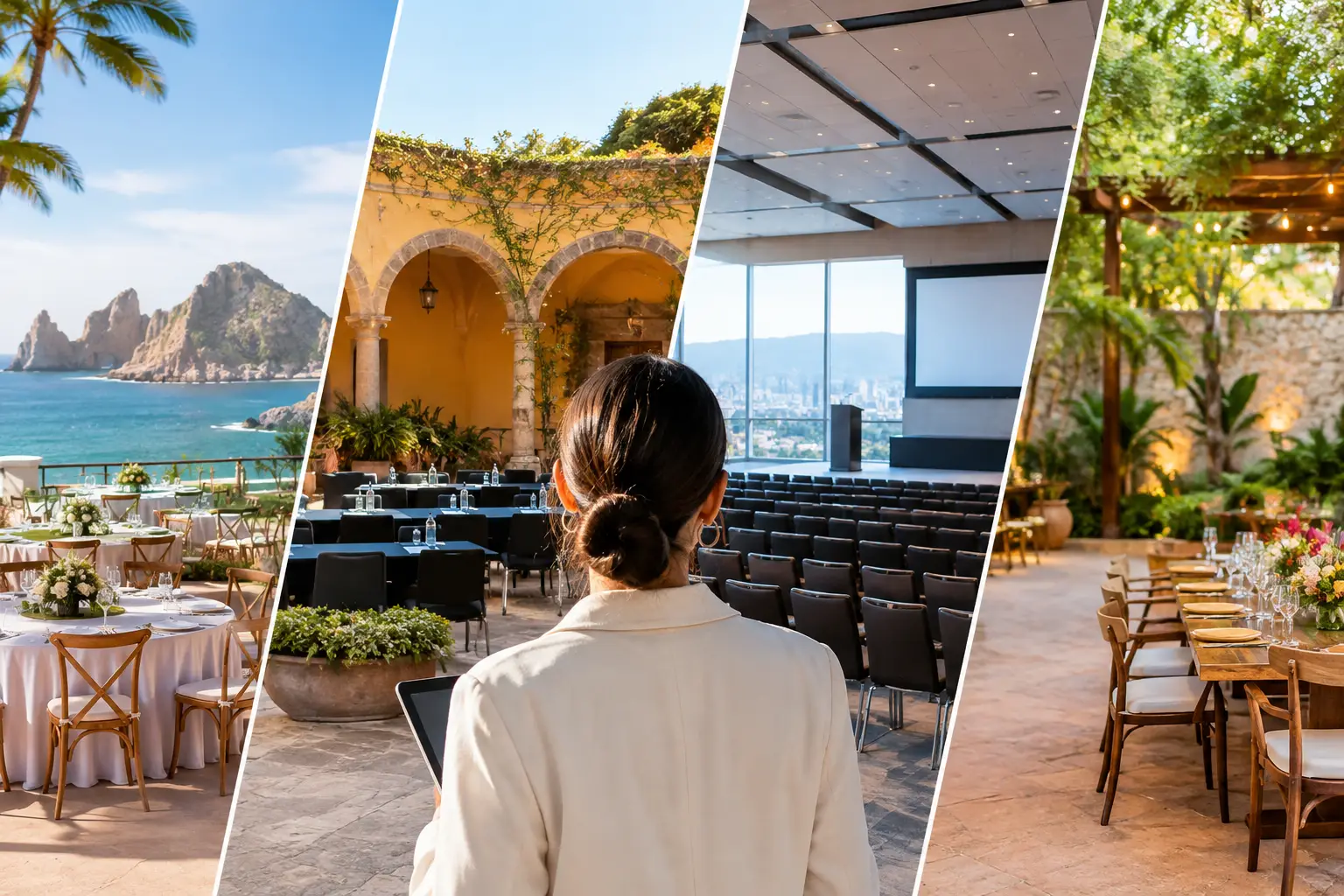
A compelling Mexico venue comparison should begin before anyone opens a gallery or requests a proposal. Consider a beachfront setting in Cancún, a conference hotel in Mexico City, or a historic property in Mérida. Each offers a unique appeal, catering to different types of programs. Ultimately, the right choice depends on how your agenda, attendee profile, budget, arrival pattern, and production needs align.
For professional planners, the goal is not to identify the most attractive venue. It is to identify the venue that can deliver the event you promised - with the right room flow, local support, guest experience, and operational certainty.
Mexico Venue Comparison Starts With the Event Brief
Start by turning the event brief into measurable venue requirements. This prevents a common sourcing problem: comparing destinations based on broad appeal while overlooking the details that determine whether an event runs smoothly.
Define the program's core purpose first. A leadership meeting needing privacy and focused discussion has different needs than an association conference with concurrent education, sponsor activations, and a large general session. An incentive program may place more weight on arrival experience, distinctive off-site functions, and group activities. A formal wedding program may need ceremony, reception, guest-room, and vendor coordination in one well-managed plan.
Then clarify the nonnegotiables. These commonly include peak room nights, general-session capacity, number and size of breakout rooms, ceiling height, load-in access, accessibility requirements, outdoor backup options, and dates with enough flexibility to create leverage. If a destination requires connecting flights for much of the attendee base, arrival windows and transfer time should also be part of the evaluation, not an afterthought.
A useful venue brief distinguishes between requirements and preferences. For example, a pillar-free ballroom for 600 attendees may be a requirement. A rooftop reception may be a preference. This distinction helps your team make a faster decision when no property checks every box.
Evaluate usable capacity, not just stated capacity
Published capacity figures are a starting point, not a final answer. Ask how the room performs with the intended setup, stage footprint, screens, camera positions, buffet lines, interpretation booths, or sponsor displays. A ballroom that seats 700 theater-style may not comfortably support 700 attendees once a substantial stage, production control, and aisle requirements are included.
The same is true for breakout rooms. Look beyond the total number available and assess their placement. Breakouts spread across multiple floors can create missed session starts and congestion. Rooms near the general session may improve flow, while a separate wing may offer useful privacy for executive discussions. The best arrangement depends on the program, but proximity should be visible in the floor plan.
Compare dates against the full event calendar
Availability is more than whether a hotel has guestrooms on a given date. Confirm whether meeting space is fully protected for your group, whether another program will share public areas, and whether construction, citywide demand, or seasonal weather patterns affect the experience. A venue may have the right ballroom but limited flexibility for a welcome reception or last-minute schedule shift.
Ask for a clear outline of space holds, release dates, and decision deadlines. This is especially valuable when evaluating several Mexican destinations at once, where flight patterns, hotel inventory, and local event calendars may vary substantially.
Compare Destinations by How They Support the Program
Mexico offers exceptional range, which is precisely why destination selection should be practical. Mexico City can suit citywide conferences, executive meetings, and programs that benefit from broad air access and a deep supplier network. Los Cabos, Puerto Vallarta, Cancún, and Riviera Maya can be compelling for incentive groups and meetings seeking resort-based convenience alongside memorable group functions. Mérida, Oaxaca, San Miguel de Allende, and Campeche can create a more distinctive cultural setting when the agenda allows for a stronger sense of place.
That does not mean one category is automatically easier than another. A major urban destination may offer more venue density, but traffic and movement between hotels can affect scheduling. A coastal program may offer a concentrated guest experience, but seasonal weather, outdoor contingency plans, and airport transfer patterns deserve closer attention. A heritage-focused destination can make a lasting impression, while requiring earlier coordination around transport, production resources, and local event restrictions.
The most reliable comparison considers three questions: How easily can attendees arrive? How efficiently can they move through the program? What does this destination make possible that another one does not? If the answer to the final question is only scenery, keep looking. The strongest destinations add value to the agenda and the guest experience.
A Mexico Venue Comparison That Holds Up On Site
Once the shortlist is in place, compare each property using a consistent scorecard. A consistent method keeps a spectacular site visit from overpowering the operational facts.
Consider scoring each venue across these five areas:
- Meeting-space fit, including usable capacity, room adjacency, and production readiness
- Guestroom inventory, room types, accessibility, and group accommodation pattern
- Arrival and logistics, including airport access, transfers, loading, parking, and security procedures
- Financial terms, including rates, food and beverage commitments, resort or destination fees, taxes, concessions, and attrition language
- Experience and service, including culinary quality, outdoor function options, staff responsiveness, and the surrounding destination offer
Weight each category according to the event. For a three-day conference, meeting-space fit and logistics may carry more weight than scenic value. For a recognition-focused incentive, the guest journey and function spaces may deserve equal consideration. The scoring is not meant to replace professional judgment. It gives that judgment a disciplined framework.
Do not compare proposals only by the quoted room rate or package price. Review what is included, what is exclusive, and what remains uncertain. Labor rules, internet bandwidth, audiovisual policies, outside supplier access, service charges, and minimum spends can materially change the total program cost. A lower initial rate can become the more expensive option once production, transportation, and mandated services are added.
Look Beyond the Venue Walls
A successful event relies on more than guest rooms and meeting space. The supplier ecosystem around the venue affects everything from transportation and entertainment to décor, staging, security, and destination experiences. This is where planners sourcing from outside Mexico can save time by identifying qualified local partners early.
Ask venues which services are in-house, which are preferred, and which can be sourced independently. There is no single right answer. In-house teams can simplify accountability and coordination, particularly for standard meeting needs. Independent specialists can bring valuable creative, technical, or destination-specific expertise when the program has more complex requirements.
The key is clarity. Confirm who owns each responsibility, who approves load-in schedules, how vendor credentials are managed, and whether outside partners face access fees or limitations. For a program with multiple moving parts, one vague answer can lead to unnecessary cost or lost setup time later.
Mexico Venue Finders can help planners bring venue and supplier research into one sourcing process, making it easier to compare local options with the same level of care.
Ask Questions That Reveal Operational Risk
During calls, site inspections, and RFP review, broad questions often produce broad answers. Specific questions reveal how a property operates under pressure.
Ask what happens if weather changes the reception plan two hours before doors open. Ask where production trucks stage, when crews can access the ballroom, and whether the venue has hosted a program with your approximate attendee count and format. Ask how banquet teams manage simultaneous meal functions, how quickly engineering support responds during general sessions, and who serves as the on-site decision-maker.
For destination programs, also ask about transfer timing at the actual hours your attendees will travel, not just average drive times. If an off-site event is central to the agenda, verify permits, noise restrictions, power availability, restrooms, accessibility, and a wet-weather alternative. Details like these may not appear in a first proposal, but they shape attendee confidence and event outcomes.
Build a Shortlist You Can Defend
The right shortlist is usually shorter than planners expect. Three well-qualified venues are more useful than ten attractive possibilities that have not been tested against the brief. Narrow the field when a property cannot meet a true nonnegotiable, when its proposal leaves key costs unresolved, or when the team cannot explain how the venue supports the program better than the alternatives.
When it is time to decide, choose the venue that makes execution easier while giving attendees a reason to remember the destination. A thoughtful comparison does more than secure space. It gives your stakeholders a clear, confident answer when they ask why this venue, why this destination, and why now.
Planning an Event in Mexico?
Finding the right venue shouldn't be overwhelming. Save time and leverage our local destination expertise to find the perfect space for your group size, budget, and event vision.
Mexico Venue Finders removes your biggest sourcing headaches:
- Unresponsive venues & slow quotes
- Unclear contracts or hidden inclusions
- Language and cultural communication gaps
- Time-consuming back-and-forth
Reach out for complimentary assistance—no obligation required.
All the best,