Resort Versus Convention Center Mexico: Which Fits?
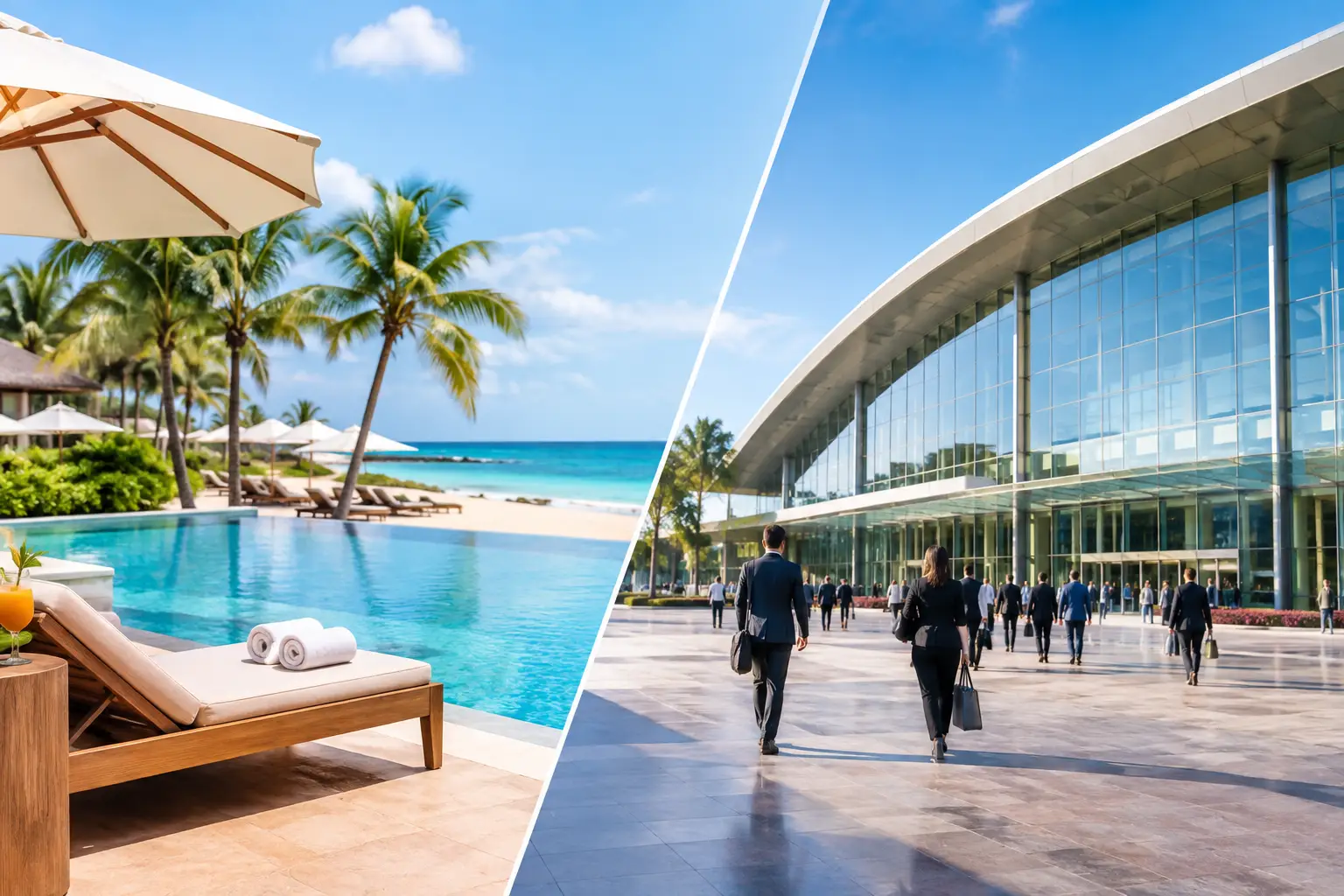
A destination can look perfect on a proposal and still work against the program once agendas, room blocks, load-in schedules, and attendee movement are mapped out. When evaluating a resort versus convention center in Mexico, the right choice is rarely about which option is more impressive. It is about which environment supports the way your group needs to meet, connect, and operate.
Mexico offers both models across major meetings destinations, often with compelling event infrastructure, experienced hospitality teams, and strong air access. A beachfront resort may create the right atmosphere for an incentive program. A purpose-built convention center may offer the scale and control required for a citywide congress. The most effective sourcing decision begins with the program, not the property type.
Resort Versus Convention Center in Mexico: The Core Difference
A resort is an integrated guest experience. Sleeping rooms, meeting space, restaurants, recreation, and group functions are typically concentrated within one property or a connected campus. For planners, that can simplify attendee flow and create more opportunities for informal business conversations between scheduled sessions.
A convention center is designed primarily around event production. It generally provides larger, more flexible exhibit halls, ballrooms, breakout inventories, loading access, registration areas, and infrastructure for concurrent programming. Attendees may stay at nearby hotels, which means the overall event experience depends more heavily on transportation plans, housing strategy, and coordination among partners.
Neither format is automatically better. A 250-person leadership retreat and a 2,000-person association conference have fundamentally different operational needs, even if both are being considered for the same destination.
When a Resort Is the Better Event Choice
Resorts tend to perform especially well when the guest experience is part of the business objective. Incentive groups, executive meetings, sales kickoffs, and smaller conferences often benefit from an environment where guests can move from a morning session to a hosted lunch, a networking activity, and an evening program without leaving the property.
This compact format is valuable for groups with limited time on site. It reduces daily transfers, minimizes the risk of late arrivals caused by traffic, and makes it easier to keep attendees engaged throughout the agenda. In destinations such as Los Cabos, Puerto Vallarta, Riviera Maya, and Cancún, the setting can also strengthen the perceived value of an earned incentive or leadership invitation.
The operational advantages of a resort
The primary advantage is consolidation. One contract may cover guestrooms, meeting rooms, catering, and many group activities. Resort event teams are accustomed to coordinating these components, which can reduce handoffs and give planners a more direct view of the attendee journey.
Resorts also make evening functions easier to stage. A welcome reception, awards dinner, or themed networking event can often take place within walking distance of the main meeting rooms and guestrooms. That convenience matters when attendance at optional functions is important.
For groups that need privacy, a resort may offer an additional benefit. A contained environment can help keep a senior leadership program focused, particularly when the agenda calls for private sessions and controlled access to participants.
Where resorts can create constraints
Meeting space is not always purpose-built for complex programs. A resort may have an excellent ballroom but a limited number of sound-isolated breakouts, restricted exhibit capacity, or fewer options for simultaneous general sessions. If your agenda includes large-scale trade show activity, intensive registration operations, heavy freight, or multiple education tracks, confirm every space requirement before making assumptions.
Guestroom inventory can also be a limiting factor. A property may be ideal for 300 attendees but unable to house all participants at peak dates. Using an overflow hotel is possible, but it changes the convenience equation and may require a dedicated shuttle schedule.
Finally, resort pricing deserves close comparison. Bundled packages can be efficient, but planners should review what is included, what carries a service charge, and whether outside suppliers face access or vendor fees. The lowest initial room rate does not always produce the lowest total program cost.
When a Convention Center Is the Better Event Choice
Convention centers are often the stronger fit when scale, flexibility, and production capability lead the decision. They are designed to handle large attendee volumes and to support the infrastructure behind major conferences, exhibitions, congresses, and multi-day corporate events.
Mexico City, Guadalajara, and Cancún are among the destinations where convention-focused facilities can support substantial programs alongside broad hotel inventories. This combination is particularly useful for organizations that need multiple price points for attendees, exhibitors, speakers, and staff.
Built for complexity and volume
A convention center can offer the kind of space planning that is difficult to recreate at a hotel. Large exhibit halls, divisible ballrooms, pre-function corridors, dedicated registration areas, high-capacity loading docks, and service access all support a more efficient production plan.
This matters for programs with a sizable expo floor, sponsor activations, poster sessions, food service for large groups, or multiple concurrent education tracks. It also matters for planners working with staging, audiovisual, exhibit, and freight partners that need dependable move-in and move-out windows.
Convention centers can provide stronger separation between event elements. A keynote session can run in one hall while exhibitors set up in another. Breakouts can operate at the same time as meal service or a committee meeting without creating the traffic pinch points that sometimes occur in a resort conference wing.
The logistics planners must own
The trade-off is that a convention center does not usually deliver one contained attendee experience. Hotel blocks may be spread across several properties, and transportation becomes a central part of the plan rather than a minor detail.
Before selecting a convention center, evaluate the walkability of surrounding hotels, travel times at the hours your program will operate, available group transportation, and the route from airport to hotel to venue. A five-minute drive can become a more significant attendee issue when thousands of people are moving at the same time.
Planners should also clarify who controls the facility's exclusive services. Internet, rigging, security, food and beverage, utilities, cleaning, and freight handling may be governed by separate policies and fees. This is standard for many large venues, but it requires a detailed budget review early in the sourcing process.
Compare the Two Options Against Your Agenda
The most reliable way to decide is to test each venue type against the actual program design. Start with the number of attendees, but do not stop there. A 600-person meeting with six breakouts and a tabletop showcase has different requirements than a 600-person general session followed by a dinner.
Consider attendee profile as well. Incentive qualifiers and executive teams may value proximity, hospitality, and destination atmosphere more highly. Association delegates may prioritize room-rate choice, exhibit access, nearby dining, and convenient flight schedules. Corporate groups may need a balance of polished guest experience and high-volume production support.
Ask venue partners to provide diagrams that reflect your agenda, not a generic capacity chart. Request proposed room assignments for every session, meal, registration period, and activation. This reveals whether the program flows naturally or whether it depends on tight room turns, long walks, or compromised setups.
Questions to Ask During Venue Sourcing
A clear request for proposal should identify the operational details that determine fit. Ask whether all guestrooms can be housed on site, how many breakout rooms are available at the same time, and whether meeting rooms have dedicated pre-function space. Confirm ceiling heights, loading access, internet capacity, exclusive vendor policies, and available dates for move-in and rehearsals.
For resorts, ask about noise separation between leisure areas and meeting functions, dining capacity for your peak meal period, and contingency options for outdoor events. For convention centers, ask about nearby hotel inventory, transportation staging, facility labor requirements, and exhibit hall access hours.
It is also wise to assess the broader destination. Airlift, airport transfer times, seasonal weather patterns, local supplier availability, and off-site event options can all influence the program. A venue is never evaluated in isolation from the destination that supports it.
A Hybrid Approach Can Deliver Both Benefits
Some programs do not need an either-or decision. A conference may use a convention center for general sessions and exhibits while placing leadership, hosted buyer, or VIP functions at a nearby hotel or resort. This approach can combine production efficiency with a more personal hospitality experience.
The hybrid model requires careful contracting and transportation planning, but it can be the right solution when attendee scale exceeds a resort's meeting capacity while key stakeholders still need elevated hosted experiences. The deciding factor is whether the added movement creates value rather than friction.
Mexico Venue Finders helps planners compare venues and trusted event suppliers by destination, so the conversation can move beyond broad categories to real availability, space configurations, and local operating considerations. Find the perfect space by putting your agenda, guest expectations, and logistical priorities at the center of the search.
Planning an Event in Mexico?
Finding the right venue shouldn't be overwhelming. Save time and leverage our local destination expertise to find the perfect space for your group size, budget, and event vision.
Mexico Venue Finders removes your biggest sourcing headaches:
- Unresponsive venues & slow quotes
- Unclear contracts or hidden inclusions
- Language and cultural communication gaps
- Time-consuming back-and-forth
Reach out for complimentary assistance—no obligation required.
All the best,