Venue Sourcing Platforms Compared for Mexico
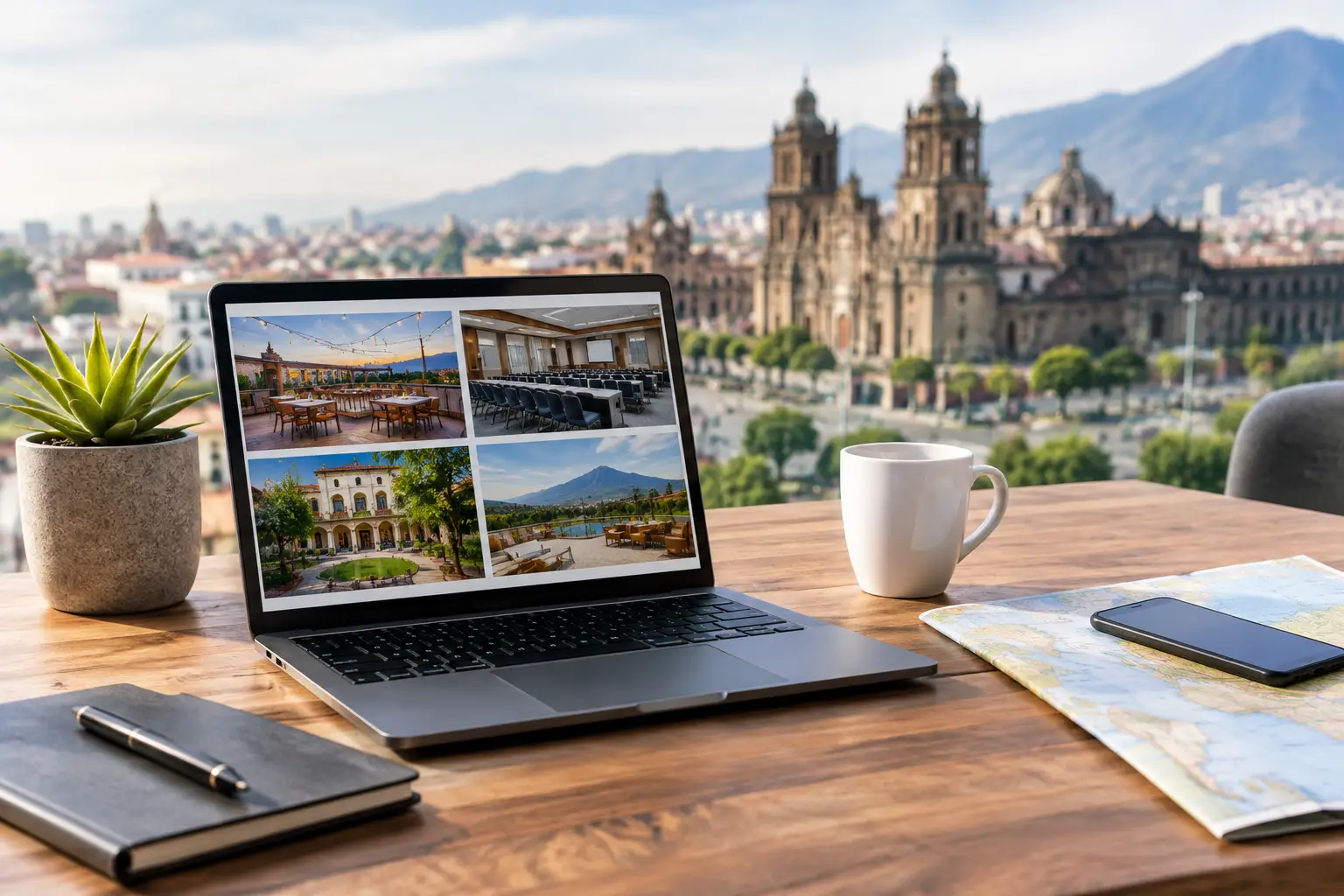
A venue database can produce hundreds of results in minutes. The harder question is whether those results help you choose a space that can actually deliver your program. When venue sourcing platforms are compared for Mexico programs, the difference is rarely the number of listings alone. It is the quality of local information, the clarity of the search process, and how easily a planner can move from a shortlist to confident conversations with the right venue and supplier partners.
For US-based planners, Mexico is not one market. A conference in Mexico City has different access, production, and guest-flow considerations than an incentive program in Los Cabos or a leadership retreat in Mérida. The right sourcing platform should help you account for those differences without turning early research into a time-consuming patchwork of browser tabs, emails, and disconnected vendor lists.
Venue Sourcing Platforms Compared: What Actually Matters
Most venue sourcing tools fall into a few practical categories. Global venue marketplaces offer broad inventory across many countries. Hotel-focused RFP systems are designed to distribute requests at scale. General search engines and local directories can surface individual properties and providers. Mexico-focused sourcing platforms concentrate on the venues, destinations, and event services within one country.
None of these options is automatically better in every situation. The most useful choice depends on the type of event, your destination knowledge, your timeline, and whether you need venue discovery only or coordinated access to supporting services.
A global marketplace can be helpful when a company is comparing Mexico with several international destinations or when a planner needs a familiar workflow across a large portfolio of programs. Its trade-off is breadth. Search results may not capture the local distinctions that affect an event, such as airport transfer patterns, neighborhood access, outdoor function reliability, supplier availability, or the practical differences between nearby resort areas.
Hotel RFP systems are often a strong fit for standardized room-block and meeting-space requirements, particularly for large conferences with clearly defined dates, room counts, and function space needs. They can speed up distribution and response collection. However, an RFP process works best after a planner has identified a qualified list. Sending an incomplete brief to too many properties can create more comparison work, not less.
General web search remains useful for validating a venue's current offerings and finding ideas outside a planner's usual rotation. Yet it rarely provides a consistent way to compare capacities, event types, destination fit, or adjacent suppliers. It also places the burden of vetting on the planner.
A Mexico-specific directory fills a different role. It is designed to make local discovery more organized by combining destination filters, venue categories, and service supplier access in one place. For planners who know the event requirements but need a dependable view of Mexico's options, this focus can reduce the time spent separating relevant leads from generic travel results.
Compare Platforms by Planning Stage, Not Just Features
A platform's feature list can look impressive while offering little value at the moment you need it. Evaluate sourcing tools against the actual stages of your planning process: discovery, qualification, outreach, and execution support.
Discovery: Can You Build a Relevant Shortlist Quickly?
At the discovery stage, filters should reflect how events are planned. Destination is essential, but it is only the first screen. You should also be able to think in terms of event use: conference hotel, dedicated meeting space, wedding venue, outdoor setting, gala location, or special-occasion venue.
Capacity data needs context. A ballroom that seats 500 theater-style may not work for a 350-person general session with a stage, cameras, control booth, interpretation equipment, and food service in the same footprint. Good venue profiles give planners enough detail to ask better questions early rather than creating false certainty.
For Mexico programs, destination-level browsing is especially valuable. A planner evaluating Cancún, Riviera Maya, and Playa del Carmen, for example, needs to understand more than total inventory. The appropriate choice may turn on transfer times, program style, off-property options, and where guests will spend their free time. A focused platform should make that initial geographic comparison easier.
Qualification: Does the Information Support a Real Decision?
A useful sourcing platform does not replace a site inspection or a detailed venue conversation. It helps planners arrive at those steps with a stronger shortlist. Look for profiles that make it clear what a venue is suited for and what additional questions may be needed.
This is where local specialization has real value. A venue may be visually appealing but operationally unsuitable for your format because of loading access, ceiling height, adjacent breakout space, sound restrictions, or availability during a major citywide period. A platform cannot answer every operational question, but it should help surface the venues worth qualifying further.
Supplier visibility matters here as well. A meeting venue is only one part of the event environment. Catering, entertainment, transportation, production, décor, and destination services can affect both the guest experience and the feasibility of the plan. If venue and supplier research happen in separate systems, planners must spend more time matching partners and confirming local availability.
Outreach: Does the Platform Help You Send a Better RFP?
RFP tools are most effective when the request is specific. Before contacting venues, define the dates or date range, peak room night needs, meeting pattern, preferred setup, food and beverage expectations, budget parameters, and any production or accessibility requirements.
The best platform is not necessarily the one that sends the most requests. It is the one that helps you contact the most appropriate options with enough detail for meaningful replies. A targeted RFP respects venue teams' time and gives your team responses that can be compared on more than headline pricing.
For a multi-day meeting, include the parts of the program that affect space and staffing: arrivals, registration, general sessions, breakouts, hosted meals, receptions, sponsor activity, and departures. If a destination experience is central to the agenda, state that as well. It may influence which areas, venues, and local partners make the most sense.
Questions to Ask Before Choosing a Sourcing Platform
Before committing to a platform, consider how it handles the practical questions your team asks every day. Can you search by Mexican destination and event need? Are listings oriented to professional meetings and events rather than general leisure travel? Can you identify service suppliers without starting a second research process? Is there a clear path from browsing to an inquiry or RFP?
Also consider the quality of the inventory. More listings are not always more useful. A smaller, relevant selection of event-ready venues can be easier to evaluate than a broad database filled with properties that do not match your group's format, capacity, or operational needs.
Finally, ask whether the platform supports your internal workflow. Corporate planners may need a consistent sourcing record for stakeholders and procurement teams. Third-party planners may prioritize speed, side-by-side comparison, and reliable local contacts. Wedding planners may place greater weight on setting, guest experience, and trusted design or entertainment partners. The platform should support those priorities without making every event follow the same path.
When a Mexico-Focused Platform Is the Better Fit
A Mexico-specific platform is particularly useful when Mexico is already the destination decision, or when it is a serious contender and you need a realistic view of what each market can support. It gives planners a more direct route to locally relevant venues and suppliers than a global system built to serve every country equally.
Mexico Venue Finders is designed around that practical need: helping planners browse venues and connect with top service suppliers across key Mexican event destinations. For a planner sourcing a conference in CDMX, an incentive in Puerto Vallarta, or a high-touch celebration in San Miguel de Allende, a focused directory can bring venue discovery and supplier procurement into the same planning conversation.
That does not mean abandoning broader tools. Many experienced teams use a global system for initial benchmarking, a local platform for destination-specific research, and direct venue outreach for final qualification. The smartest approach is often a combination that matches the complexity of the program.
The platform you choose should make your next decision clearer. Start with the event's nonnegotiables, search within the destinations that can support them, and build a shortlist of partners equipped to help your program work from arrival through the final departure.
Planning an Event in Mexico?
Finding the right venue shouldn't be overwhelming. Save time and leverage our local destination expertise to find the perfect space for your group size, budget, and event vision.
Mexico Venue Finders removes your biggest sourcing headaches:
- Unresponsive venues & slow quotes
- Unclear contracts or hidden inclusions
- Language and cultural communication gaps
- Time-consuming back-and-forth
Reach out for complimentary assistance—no obligation required.
All the best,